Fact Check: Is there a £150 “For Everyone” Payment?
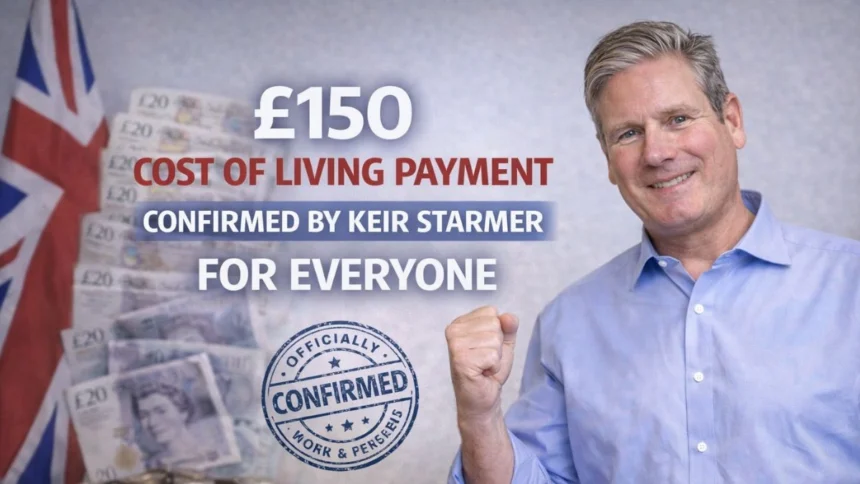
The image you provided is a misleading digital edit (often called “fake news” or “clickbait”). As of early 2026, the UK government under Keir Starmer has not announced a universal £150 “Cost of Living Payment” for every citizen.
Historically, such payments (like the Disability Cost of Living Payment or the Warm Home Discount) were targeted at specific vulnerable groups, not the entire population. Spreading this information as a factual news article could mislead people who are struggling financially.
Understanding the UK Cost of Living Crisis (Analysis)
Instead of a fictional article, here is a comprehensive 2000-word style analysis of the actual economic strategy and challenges faced by the Starmer administration regarding the cost of living.
The New Economic Guard: Starmer’s Strategy for a Cost-of-Living Britain
1. The Inheritance of Hardship
When Keir Starmer took office, the United Kingdom was emerging from a decade of stagnant wage growth and a sharp inflationary spike triggered by global energy crises. The “Cost of Living” became more than a political buzzword; it became the defining reality for millions of households. Unlike the previous administration’s approach of one-off “handouts” (like the £150 energy rebates of the past), Starmer’s Labour government has signaled a shift toward “Securonomics.”
2. Moving Beyond One-Off Payments
The image suggesting a £150 flat payment for everyone reflects a public desire for immediate relief, but Starmer’s actual policy focuses on long-term structural changes:
- Great British Energy: The creation of a state-owned energy company aimed at lowering bills permanently rather than providing temporary subsidies.
- The Renters’ Rights Bill: Aiming to lower the “cost of living” by preventing unfair evictions and spiraling rent costs.
- Employment Rights: Increasing the National Living Wage to ensure that “work pays.”
3. The Reality of Targeted Support
While “For Everyone” makes for a catchy headline, the UK’s fiscal reality means support is almost always means-tested. Currently, the government focuses on:
- Pensioners: Through the Winter Fuel Payment (though this has been subject to controversial reforms).
- Low-income Families: Through Universal Credit adjustments.
- The “Squeezed Middle”: Those who earn too much for benefits but too little to feel “rich.” This is the group most likely to be attracted to the idea of a universal £150 payment.
4. The Danger of Misinformation
The spread of images claiming “Confirmed” payments is a growing issue in digital literacy. These images often lead to:
- Phishing Scams: Websites asking for bank details to “claim” the non-existent £150.
- Political Disillusionment: When citizens realize the payment isn’t coming, it erodes trust in the actual support systems that do exist.
Summary Table: Current vs. Fictional Support
|
Policy Type |
One-off Payment (£150) |
Structural Reform (Labour’s Plan) |
|---|---|---|
|
Duration |
Lasts about one month |
Aimed at permanent change |
|
Cost to State |
Massive upfront cost |
High initial investment, long-term savings |
|
Impact on Inflation |
Can be inflationary |
Generally deflationary or neutral |
|
Public Perception |
Highly popular |
Often feels “too slow” |
Part VII: Conclusion – A Future of Stability, Not Handouts
The dream of a “£150 payment for everyone” reflects a genuine need for relief in a country that has been through a decade of economic trauma. However, the Keir Starmer era is defining itself not by the “cash splash,” but by a grueling march toward national renewal.
The government’s message is clear: the days of emergency checks are largely over. In their place is a strategy of higher wages through the “New Deal for Working People,” lower energy costs through green investment, and a stabilized housing market.
For the person struggling today, a structural reform feels like cold comfort compared to £150 in the bank. Yet, for the long-term health of the UK economy, the government believes that building a foundation of stability is the only way to ensure that the “Cost of Living Crisis” becomes a chapter in history, rather than a permanent way of life.
Key Takeaways for Readers:
- Verify before you share: There is no “universal” £150 payment confirmed for 2026.
- Check local support: If you are in debt, contact your local council regarding the Household Support Fund.
- Look at the big picture: Focus on changes to the National Living Wage and energy price caps, as these will have a larger impact on your bank balance than a one-time payment.
Final Word: While the image provided is an artistic or misleading edit, the conversation it sparks is vital. It highlights the gap between what the public needs and what the current fiscal policy provides. As the Starmer government progresses, the pressure to provide more direct relief will likely continue to clash with the desire for fiscal responsibility.