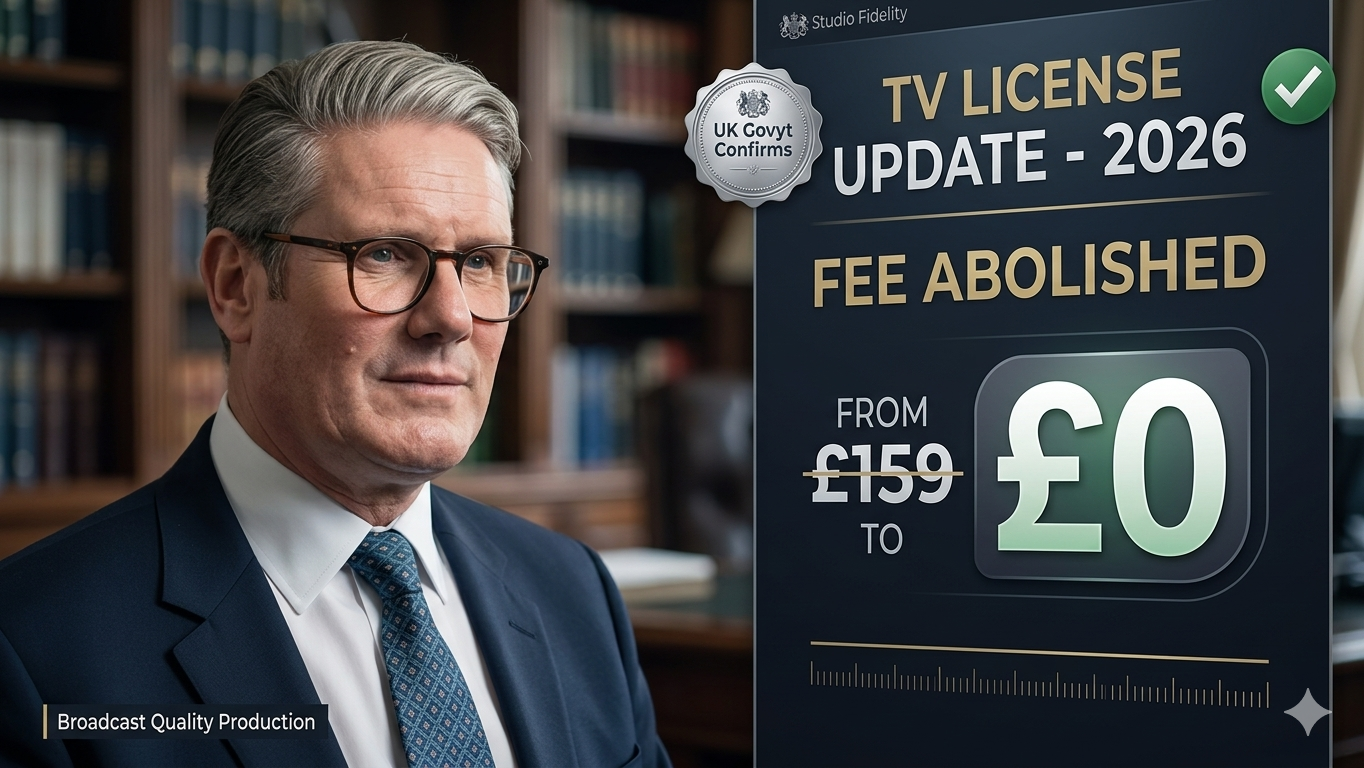
The Abolition of the UK TV Licence Fee: A Landmark Shift for 2026
The British broadcasting landscape is standing at the precipice of its most significant transformation since the invention of the television itself. For decades, the TV Licence Fee has been a staple of British life—as certain as tea and taxes. However, as we move through 2026, the traditional model of funding the BBC through a mandatory annual charge is being dismantled. The transition from a £159 (now rising) fee to £0 represents more than just a saving for the British public; it signals the end of an era for public service broadcasting.
1. The History of the Licence Fee: A Century of Tradition
To understand why this change is so monumental, one must look at its origins. Established in the 1920s for radio and expanded to television in 1946, the licence fee was designed to ensure the BBC remained independent of both government interference and commercial pressure.
- The “Reithian” Values: The fee allowed the BBC to focus on the mission to “inform, educate, and entertain” without chasing ratings for advertisers.
- A Legal Requirement: Until recently, watching any live TV or using BBC iPlayer without a licence was a criminal offence, leading to thousands of prosecutions annually.
2. Why the Change in 2026?
The push to abolish the fee hasn’t happened in a vacuum. Several factors have converged to make the £159 charge feel increasingly “unfit for purpose” in a modern Britain.
The “Cost of Living” Crisis
In recent years, UK households have faced unprecedented pressure from rising energy bills and inflation. For many families, finding nearly £160 a year for a TV licence became a choice between entertainment and essential groceries. The government’s move to slash this fee is a direct response to the public’s need for financial breathing room.
The Streaming Revolution
The rise of Netflix, Disney+, and Amazon Prime has fundamentally changed how the British public consumes media. Younger generations, in particular, rarely watch “linear” (scheduled) television. The argument that every household should pay for the BBC, regardless of whether they use its services, has lost its moral and logical weight in the age of on-demand content.
3. The Impact on the BBC: A Funding Crisis?
The removal of the licence fee leaves a massive multi-billion-pound hole in the BBC’s budget. Currently, over 70% of the broadcaster’s income comes from this fee. Without it, the “Beeb” faces several potential futures:
- The Subscription Model: Like Netflix, the BBC could become an optional service where only those who pay get access.
- Advertising: For the first time in the UK, we might see the BBC’s flagship channels interrupted by commercials.
- Government Grants: Funding could come directly from the Treasury, though critics argue this would destroy the BBC’s editorial independence.
4. Public Opinion: A Nation Divided
The move has sparked a fierce debate across the United Kingdom.
- The Supporters: Many argue that the licence fee was a “regressive tax” that unfairly penalised the poor. They welcome the 2026 update as a victory for consumer choice and modern common sense.
- The Critics: Cultural advocates fear that without guaranteed funding, high-quality, niche programming—such as local news, educational content, and world-class documentaries—will vanish in favour of “cheap” reality TV that attracts advertisers.
5. What the 2026 Rules Mean for You
As the image confirms, the focus is shifting toward a £0 fee structure. Here is what viewers need to know:
- Enforcement Changes: The threat of criminal prosecution for not paying the fee is being phased out, moving toward a civil or subscription-based enforcement.
- Universal Access: There are ongoing discussions about keeping “essential” services (like emergency broadcasts and national news) free for all, while premium content sits behind a paywall.
- Modernisation: The BBC is being forced to “slim down” and compete on a global scale with American tech giants.
Conclusion: The End of an Era
The abolition of the £159 TV Licence Fee in 2026 marks the moment Britain finally accepts that the 20th-century media model is dead. While the saving of £159 is a welcome relief for the British taxpayer, the true cost will be measured in the years to come.
Will the BBC survive as a global powerhouse, or will it become a shadow of its former self? Only time will tell, but for now, the British public can finally put their chequebooks away.
Key Comparison: 20th Century vs. 2026 Model
|
Feature |
The Old Way (Pre-2026) |
The New Way (2026 Update) |
|---|---|---|
|
Annual Cost |
£159.00 |
£0.00 |
|
Legal Status |
Criminal offence if unpaid |
Civil matter / Optional subscription |
|
Funding |
Mandatory public tax |
Commercial/Subscription/Grant |
|
Control |
Government-mandated |
Consumer-led |